You Can Laugh at Sales WorriesIf You Follow These Rules
Content Is Free Now. Trust Isn't.
Here are the 11 old rules that make a total stranger trust your page enough to buy.
Your competitor has the same AI you do. So does everyone else, and their buyers scroll past all of it. What none of them have is the trade itself. The great copywriters of 1900 to 1929 wrote it down, and I learned it at eight years old, selling thrillers to grown-ups from a street-market stall. The Timeless Seller is not another pack of prompts. It's those 11 rules, taught through short stories you won't forget, with the exact words to borrow. Your AI does the typing. Now you'll know what to tell it.
Read it in an evening or two No homework · Bonus pack included
If you only read one paragraph, read this one. In the time it takes you to read this page, a flood of polished, perfectly punctuated, AI-written posts, emails and offers will go out, and almost none of them will make anyone buy. This letter is about the small group of sellers who still get replies, referrals and repeat buyers, and the old, unfashionable reasons why. If you'd like to join them, keep reading.
From the desk of Maurice Hawatty · Clapton Square Success
Dear Fellow Seller,
Let me describe your week. Tell me if I get it wrong.
On Monday you wrote a post. You ran it through AI three times until it read beautifully. You checked the "best time to post," and you posted it then.
On Tuesday you answered every message, including the one from the person who wanted a "quick chat" and turned out to want free advice for forty minutes.
On Wednesday you sent a proposal. It was clear, friendly and well-priced, and you'd written it carefully.
On Thursday and Friday you refreshed your inbox more often than you'd like to admit.
Refresh. Nothing. Refresh. (AI-generated image)
And the money? It barely came in at all.
So on Saturday you did what every hard-working seller does. You went looking for the fault in yourself.
Maybe I'm just not a natural salesperson. Maybe I need a better tool. A newer funnel. One more course. Maybe the next AI subscription is the one that finally works.
Stop right there, because that thought is costing you more money than any bad post ever did. It's wrong. And I'm going to show you exactly why.
The ugly truth nobody selling you software will say
You're not bad at selling. You're playing a game that stopped paying.
Here's what happened while you were busy working.
Your competitor got the same AI you have. So did the nineteen-year-old working from a bedroom. So did the big firm down the road with fifty times your budget. Everyone is pressing the same button and getting the same smooth, confident, perfectly forgettable result.
Your buyers noticed long before you did. They scroll past it now without blinking. Your carefully polished post looks, to them, exactly like the four hundred others they saw before lunch.
When everyone has the same tools, the tools stop being an advantage. Being louder doesn't help. Being faster doesn't help. Being more polished doesn't help either.
So what's left? The same thing that was there before any of it existed. The question every seller has faced since the first coin crossed the first market table:
"How do I get a busy, doubtful stranger to trust me enough to buy?"
Content is cheap now. Speed is free. Trust is the only scarce thing left, and here's the part that matters: you can't generate it. You can only earn it. Sellers have always earned it the same way, and the rules haven't changed in generations.
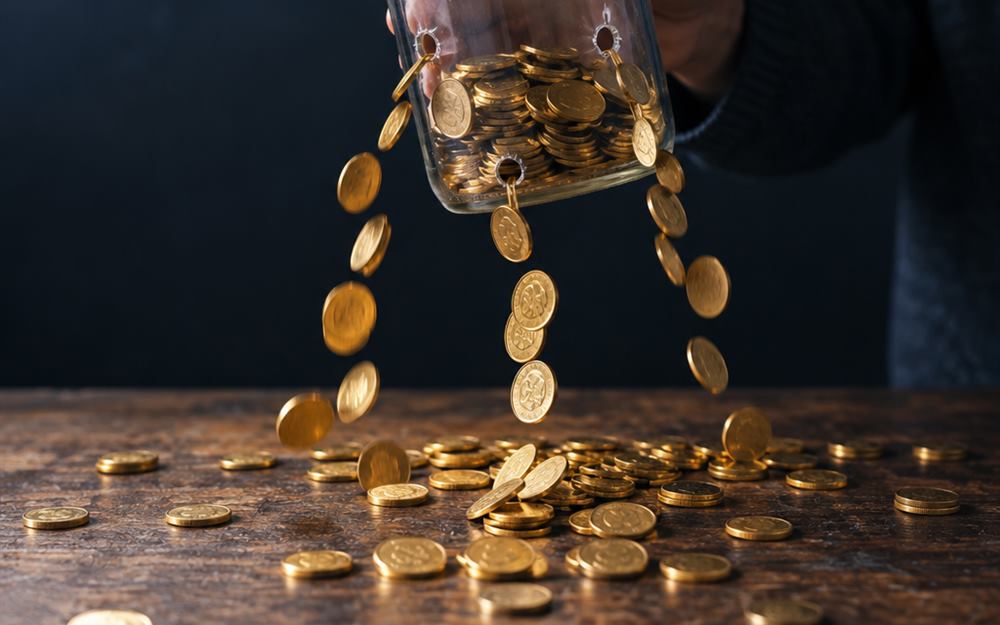
Every "only 3 spots left!" fills one jar and quietly drills a hole in the other. (AI-generated image)
A story from Chapter 1
Twelve thousand sign-ups. Thirty-seven sales. And one email she didn't want to open.
Let me tell you about Sophia. She's one of the characters in the book, and you've probably met someone like her. You might even be her.
From The Timeless Seller, Chapter 1
Sophia is an online coach. One rainy Tuesday she sits at her kitchen table, her tea going cold, watching the numbers from her big webinar settle. Twelve thousand people signed up. Thirty-seven bought.
She'd done everything the internet told her to do. A countdown timer ticking in red. "Only 3 spots left" (there were 40). A string of urgent emails with subject lines in capital letters. For a few weeks the numbers looked fine. Then open rates dropped, unsubscribes climbed, and the refund requests started arriving, one polite sentence at a time.
Then came the reply she'd been avoiding:
"I signed up because I trusted you. Then every email felt like a car dealership."
That evening she does something unglamorous. She writes back to that one woman, and she puts no link in the email. She answers the question the woman had asked months earlier, properly, and attaches a one-page worksheet. The next morning:
"This is the first email from you I've actually used. Thank you."
Sophia and her numbers are fictional and illustrative. Every chapter opens with a short story like this one.
Sophia had won the trick and lost the trust. Read that again, because it's the whole problem in one sentence.
The book calls the fix the two-ledger rule. Every time you deal with a customer, you add to one of two ledgers: your money ledger or your trust ledger. Tricks fill the first and drain the second. Service fills both, more slowly, and it keeps filling them for years.
Most sellers today are running a big money ledger on an empty trust ledger, then wondering why the whole thing feels like pushing a car uphill.
Where these principles come from
I learned this at eight years old, behind a table of second-hand comics and thrillers
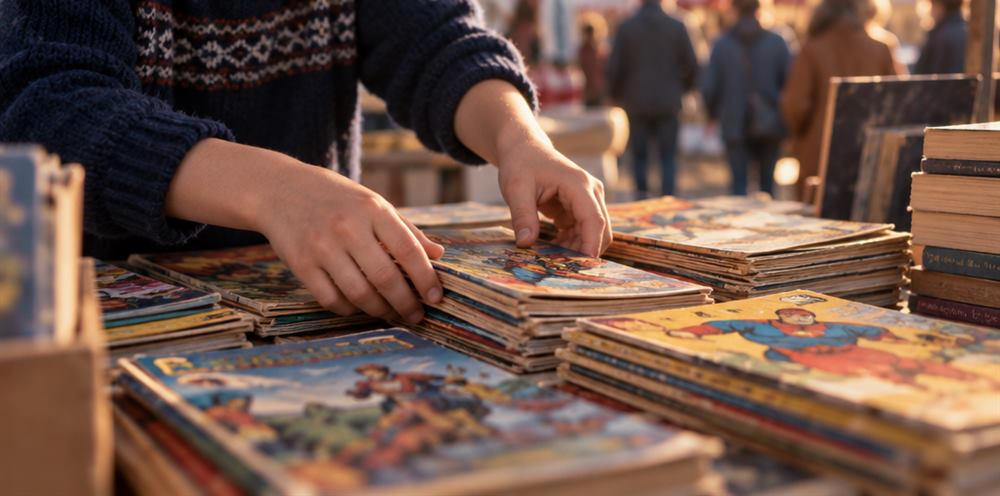
A street-market stall of second-hand comics and books. (AI-generated image)
I learned to sell before I learned to shave.
It was the 1970s. I was eight years old, and I had a stall at a local street market selling second-hand comics and books, mostly novels. Thrillers and detective stories were what people wanted most. They went faster than anything else on the table.
My customers weren't only children. Most of them were adults: retired people, and ladies who spent most of their days at home and read a great deal. They were regulars. They knew exactly what they liked, and they told me straight away when I got it wrong.
Think about that for a second. An eight-year-old, selling to grown-ups, many of them old enough to be his grandparents.
Nobody buys a thriller from a child twice out of politeness. Adults don't keep coming back to a little boy's table every Saturday because he's cute. They come back because he's useful to them, because he remembers what they like and because he never once passes off a dud. That's all selling has ever been, and it was the best business education I've ever had.
A market stall is a brutal teacher, and an honest one. There's no algorithm to blame and no ad budget to hide behind. People walk up the aisle, glance at your table, glance at you, and decide in about two seconds whether to stop or keep walking.
So an eight-year-old has to work things out fast. Here are three things I worked out at that table. Pay attention to them, because all three still work online today, and you'll find each one again in the book.
1
The best cover faced the aisle
At first I laid everything flat in neat piles, and people walked straight past. So I stood the most exciting cover upright on the front corner of the table, facing the people walking towards me. Now they stopped before they'd even reached the stall.
Today: that cover is your first line, your thumbnail, your subject line. You get two seconds, and most sellers spend them saying hello. Chapter 3, Win the First Two Seconds.
2
I told them what was wrong before they found it
One detective novel had a torn cover. My instinct was to bury it at the bottom of the pile and hope. Instead I put it on top with a note: "Torn cover. Every page there. Half price." It sold within the hour. And the man who bought it stopped checking the others. He picked three more, paid, and never once flicked through them for damage.
That was my first "aha." The moment you point out a flaw yourself, people stop hunting for the ones you didn't mention. They believe everything else you say.
Today: say plainly who your product is not for, and what it won't do. It feels like turning buyers away, and it makes the right ones trust you enough to buy. Chapter 7, Words That Sell.
3
I kept a notebook of what my regulars were missing
A little notebook: which author each reader followed, which titles they'd already read, and which comic issue a collector still needed. When the next one turned up in a box I'd bought, I put it aside with their name on it. On Saturday I'd say, "I kept this one for you." Nobody ever asked the price.
Today: that notebook was my first customer list. Know what each person wants, tell them when you have it, and own that list yourself, so no platform can take it from you. Chapter 11, Build Something That Lasts.
None of it cost a penny. None of it needed a tool. (AI-generated image)
No software. No ad budget. Just a boy who worked out what makes people come back. That's the whole game, then and now, and most adults with a marketing budget still haven't worked it out.
Since then I've worked in aeronautics, where checklists and precision weren't optional. I've run the family shop. I've built graphics and websites for businesses across London. I've sold manuals and hard-to-find programs online, with some wins and some expensive lessons.
The tools changed every year. The market-table rules never did.
Every platform I ever used changed its rules sooner or later. What a regular at the stall cared about never changed once. That's why I wrote this book.
The big idea
The tools change. People don't.
Here's something odd that very few people in the "AI marketing" business will tell you.
Between 1900 and 1929, the great copywriters, the people we still call the masters, were working on your exact problem. They had no algorithms, no AI and no social media. They had printed ads, sales letters, the post and the handshake. Every word had to pay for itself in sales, or the writer was out of a job. And they worked out things we keep forgetting.
Claude Hopkins, the ad man whose 1923 book Scientific Advertising is still read today, insisted that an ad should be tested, tracked and judged by the sales it brought in, not by how clever it looked. He was writing about newspaper coupons. He could just as easily have been describing your Instagram ads.
Some of the ideas are older still. In 1748, Benjamin Franklin told young tradesmen that a reputation for keeping your word is capital. Swap "credit" for "reviews" and you've got a business strategy for this year.
The masters never saw a smartphone. But they understood the person holding one better than most of the marketers selling to them today. This book takes what they knew and puts it to work in the AI era.
They knew that:
People buy from those who help them first.
Attention is brief, so the opening line is everything.
What you don't measure, you can't improve.
Trust is built from small, boring, repeated acts.
Nobody wants to be interrupted, but everyone welcomes an invitation.
And here's why right now is the best moment in history to learn them. AI is a megaphone. Feed it noise and it shouts noise. Feed it these principles and it carries a message people trust further and faster than any market trader could have dreamed.
Old wisdom, carried by the new machine. That's the seller who stands out now, and it's exactly what this book gives you.
Let me save you some time
First, what this book is not
It's not another "100 ChatGPT prompts" e-book that's out of date before you finish reading it.
It's not a fat textbook you'll put on the shelf with good intentions and never open again.
It's not a 30-day plan you'll fall behind on by day four. There are no worksheets and no scorecards. It's written to be read and used.
It's not a get-rich scheme. No secret hacks, no fake countdown timers, no "make six figures by Friday."
It's not anti-AI. Far from it. Every chapter ends with a prompt that puts AI to work for you, in your own voice.
So what is it?
Introducing
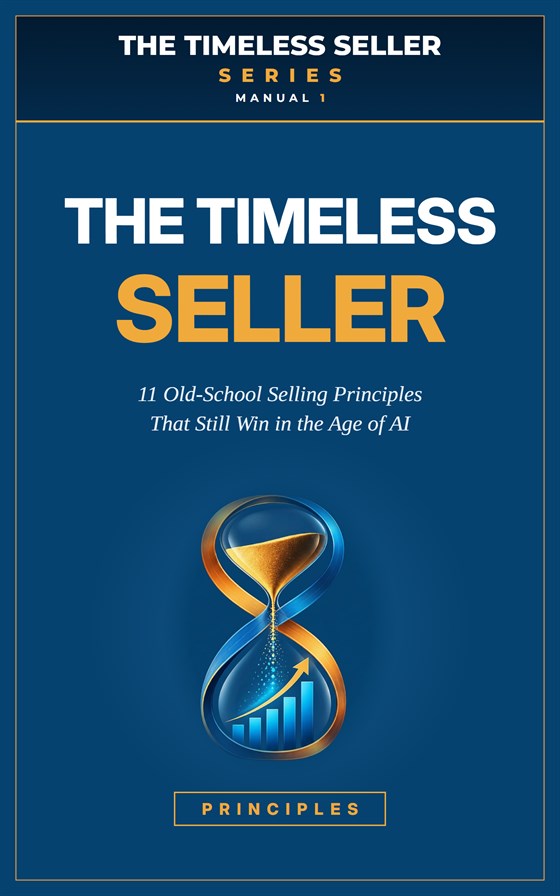
The Timeless Seller: 11 Old-School Selling Principles That Still Win in the Age of AI
It's a short, story-led manual built on principles that have already outlived every platform you've ever posted on. It's written in plain words, for people who sell their own skills, products or services and carry the whole sales job themselves.
Every chapter follows the same easy rhythm, so you always know where you are:
The StoryA short scene that makes the principle stick. (The characters are fictional.)
The Old WisdomWhat the classic sellers knew, and why it still holds.
The New PlaybookHow the principle works online today.
Before & AfterWhere sellers go wrong, with the fix side by side.
Words You Can BorrowReady-made messages, posts and replies.
Let AI HelpA ready-to-paste prompt that does the heavy lifting.
And there's an infographic in every chapter that puts the whole idea on a single page.
Don't take my word for it. Here's a taste from Chapter 1.
This is the kind of before-and-after you'll find in every chapter:
Before"Buy my course now! Only 3 spots left!!!"
After"Here's a free one-page checklist that fixes [specific problem]. If you'd like help applying it, I run a small program. Either way, enjoy."
Notice what changed. The second version gives first, invites second, and leaves the reader free to say no. And this is one of the "Words You Can Borrow," ready to copy today:
The Helpful Opener · message to a new contact"Hi [Name], I saw you're working on [goal]. I put together a short [checklist/guide] on [topic] that might save you some time. Want me to send it over? No strings attached."
That's one message. The book is full of them: openers, follow-ups, posts, referral notes and honest "this isn't right for you" replies, each one written so you never face a blank page again.
Short chapters you can read with one coffee and use the same afternoon. (AI-generated image)
What's inside
Here's what you'll discover in the eleven chapters
Part 1 · The Foundation
Serve First, Sell Second. The two-ledger rule, and why every countdown timer fills one ledger while it quietly empties the one that matters more.
Why telling some people "not yet" makes more people say yes. It's the story of a consultant who built a quiz that sent people away, and what happened to his bookings after it did.
Be a Real Person Online. Why honest lessons build more trust than perfect photos, and how to stop performing a persona.
Win the First Two Seconds. The one rule that works for videos, emails, articles and websites alike: lead with the result, never the greeting.
Part 2 · The System
Small Systems, Big Results. How a handful of small, steady routines, each with a clear anchor, replaces the weekly firefighting.
Count What Counts. The one question to ask of every number on your dashboard: "What decision would this change?" If the answer is "none," it's decoration.
Use AI Without Losing Your Soul. The four-level automation spectrum, the "sweet spot" where most of your work belongs, and the Sacred Spaces you should never hand to a machine.
Part 3 · The Execution
Words That Sell. Why "Transform Your Business!" gets scrolled past, and why copy that even says who it's not for gets chosen.
Invite, Don't Interrupt. The three-step Invitation Path that replaces cold DMs and pushy follow-ups with offers people are glad to get.
Trust Is Your Real Currency. Three habits of the sellers people recommend without being asked, and the two numbers that work as a trust thermometer.
Part 4 · The Long Game
Protect Your Energy. Why a rested seller sells better and lasts longer, and how to treat your energy the way the old merchants treated capital.
Build Something That Lasts. Stop renting attention. Own your list, your knowledge and your relationships, so that no algorithm change can take them away from you.
The Seller You Are Becoming. The closing chapter, where the eleven principles come together into the kind of seller who never goes out of date.
Plus the extras at the back: the Whole Book on One Page for a five-minute refresher, "Words to Keep, Words to Retire" (phrases that build trust and phrases that quietly cost you sales), the Seller's Pledge, and a reading list of free public-domain classics.
The people in the chapter stories are fictional and their numbers are illustrative. They're there to teach the ideas, not as case studies or income claims.
Now picture this
A month from now, a different kind of week
Imagine you send one email, written with principles you now understand in your bones, and the reply says, "It felt like you were writing just to me."
Imagine walking into a sales conversation without the knot in your stomach, because you're inviting, not chasing.
Imagine telling someone, kindly, "I'm not the right fit for you yet," and watching them come back three months later ready to buy, and bring a friend.
Imagine using AI the way it should be used: as a tireless assistant that carries your message in your voice, while you get your evenings back.
The moment the penny drops. (AI-generated image)The "payment received" kind of evening. (AI-generated image)
That's the seller this book is built to help you become. It won't happen because of a trick. It happens because people trust you, and once they do, they keep coming back.
Platforms come and go. Algorithms change overnight. A seller who understands people never goes out of date.
I'll be honest: this book is not for everyone
It's for you if…
You sell a product, a service or your own expertise, and you do the selling yourself
You're good at what you do and you're tired of wondering why more people aren't buying
You're uncomfortable with "salesy," and you'd like a way of selling you can be proud of
You use AI, or want to, as a helper rather than a replacement
You like short chapters you can actually finish
Please don't buy it if…
You want overnight riches or "secret hacks"
You want AI to do your thinking for you
You like fake scarcity and countdown timers, and you plan to keep using them
You aren't willing to try one small idea this week
If you're in the second column, I mean it: keep your money. This book will only annoy you.
If you're in the first column, a coach might live by the first two chapters. A shopkeeper might find the fourth changes everything. A founder might find the tenth saves their health. The book works like a toolbox, so you reach for the tool the job needs.
Fair questions, straight answers
Isn't this just old advice repackaged?
The principles are old on purpose. They come from the masters of copywriting, and they've outlasted every medium since because they work on people, and people haven't changed. But the stories, the frameworks, the before-and-afters, the words you can borrow and every AI prompt are original to this book and written for the tools you use today.
I've bought business books I never finished. Why is this one different?
There's no homework, no worksheet and no thirty-day plan to fall behind on. Each chapter stands on its own and opens with a short story, so you can read one on the train, use its borrowed words that afternoon and come back for the next when you're ready.
Do I need to be good with AI?
No. Every prompt is copy-and-paste. Fill in the brackets, paste it into ChatGPT, Claude or Gemini, and you have a strong first draft.
Was AI used to make this book?
Yes. AI tools helped develop it, and a human publisher edited, shaped and approved it. That's exactly the balance the book teaches.
Are the stories real?
The characters in the chapter stories are fictional, written to show each principle at work. My own story on this page, the market stall, is true.
Will this guarantee me more sales?
No honest book can promise that. It gives you the principles that build trust and sales over time. Your results depend on your market, your offer and your effort. What I can guarantee is your money back if it isn't worth it to you (see below).
Which formats do I get, and how?
You get both PDF and EPUB, delivered instantly after checkout. Read the PDF on your laptop or print it, and open the EPUB on your phone, tablet or e-reader.
So, what does it cost?
Less than the AI tool you'll stop opening next month
Think about what you've already spent trying to fix this. The subscriptions. The course you finished a third of. The "ultimate prompt pack." The ads that got likes and no sales.
Now think about what just one of these is worth to you: one new client, one email that finally gets replies, one referral from someone who already trusts you. For most people who sell their own work, any one of those is worth many times the price of this book, and the principles keep paying for years after the tools have changed.
So I've kept the price where nobody has to think twice about it:
YES! I want to sell the way people trust. Send me The Timeless Seller now.
1
The Timeless Seller (PDF + EPUB) 11 principles in four parts, plus the closing chapter. A short story to open each chapter, Old Wisdom and New Playbook, before-and-afters, Words You Can Borrow, a ready-to-paste AI prompt and an infographic in every chapter.
+
The extras at the back The Whole Book on One Page, Words to Keep and Words to Retire, the Seller's Pledge, and the reading list of free classics.
+
FREE BONUS: The AI Prompt Pack 43 copy-and-paste prompts for offers, headlines, sales pages, social posts, emails, follow-ups, customer care, systems and planning. Fill in the brackets and get a strong first draft in minutes.
✓
The Market-Table Guarantee A full 30 days to read it, try it and decide.
After checkout you'll get your download straight away.
The Market-Table Guarantee
At a market stall, a trader who argues over a refund doesn't see that regular again. Standing behind what you sell is how a stall stays in business for years.
So here's my promise. Read the book. Try a principle or two. If you don't feel it was worth far more than $19.95, email me within 30 days and I'll refund every penny. No questions, no hoops, no hard feelings.
I'm taking all the risk. The only way to lose is not to try it.
Why I'd start this week
There's no countdown timer on this page, and there won't be one. You know how I feel about those by now.
But there is a cost to waiting, and you're already paying it. Every week you keep pressing the same button as everyone else is another week of posts into silence, proposals that go quiet and evenings spent refreshing your inbox. It's another week of filling the money ledger while the trust ledger runs dry.
The principles in this book take an evening to read and about five minutes to start using. The first "Words You Can Borrow" message could go out tomorrow morning.
No pressure, no chasing, just a yes that feels good on both sides. (AI-generated image)
You have two choices
Choice one: close this page and carry on as you are. More tools. More noise. More hoping the next gadget is the one. You already know how that story ends, because you're living it.
Choice two: do what the market regulars rewarded every Saturday. Help first. Tell the truth. Keep showing up. Learn the principles that have outlived every tool, then let AI carry them further than you ever could on your own.
One choice costs you $19.95, fully refundable. The other costs you another month like the last one.
See you at the table, Maurice Hawatty Clapton Square Success
P.S. Skimmed to the bottom? Smart sellers often do, so here's the short version. Everyone now has the same AI, so the tools aren't your edge any more. Trust is. The Timeless Seller gives you 11 principles from the copywriting masters of 1900 to 1929, the words to borrow and an AI prompt for each one, plus a free 43-prompt pack, for $19.95.
P.P.S. Remember, you're covered by the Market-Table Guarantee. Read it, try it, and if it isn't worth far more than you paid, email me within 30 days for every penny back. You risk nothing except another quiet month.
P.P.P.S. Remember Sophia, who had twelve thousand sign-ups and thirty-seven sales? Her turning point wasn't a new tool. It was one honest email with no link in it. Chapter 1 shows you how to write yours. You could send it tomorrow morning.
The Timeless Seller by Maurice Hawatty, published by Clapton Square Success. This book is for education and inspiration. Results depend on your market, your offer and your effort; no particular income or outcome is promised. Characters and numbers in the book's stories are fictional and illustrative. Photographs on this page are AI-generated. AI tools assisted the creation of this book, which was edited and approved by a human publisher.